-
 Hacettepe Teknokent, 4.Arge Binası
B-Blok No:9, Çankaya Ankara Türkiye -
 +90 312 227 02 64
-
 info@hoytek.com.tr

-
Hacettepe Teknokent, 4.Arge Binası
B-Blok No:9, Çankaya Ankara Türkiye -
+90 312 227 02 64
-
info@hoytek.com.tr
Why Hybrid ROVs Are the Smart Business Choice: Beyond the Full-Electric Hype
The ROV industry is at a crossroads. Legacy hydraulic systems dominate field operations, yet manufacturers are racing to pivot toward full-electric ROVs as the future. But the market narrative misses a critical reality: hybrid ROVs represent the pragmatic path forward, balancing innovation with operational reliability and economics.
The full-electric push looks compelling on the surface. It promises cleaner technology, reduced maintenance overhead, and alignment with modern engineering trends. But this vision carries hidden costs. Full-electric ROVs demand extensive semiconductor content and complex DC power systems down the tether. On a platform or offshore jobsite, if something fails, you are stuck. Repair expertise is scarce, spare parts are specialized and expensive, and downtime cascades into lost revenue—with vessel-day costs often exceeding hundreds of thousands of dollars per 24 hours. Also all legacy tools are haydraulic, and transition of those into electric will take years.
Meanwhile, hydraulic systems carry well-known burdens. When contamination leaks into the hydraulic fluid, the entire system must be drained and replaced—a process taking multiple days. Then comes disposal: used hydraulic fluid is classified as regulated waste, requiring certified handling and environmentally compliant disposal, adding substantial costs and compliance overhead. Yet technicians worldwide understand hydraulic repair, and legacy tools remain cheap and abundant.
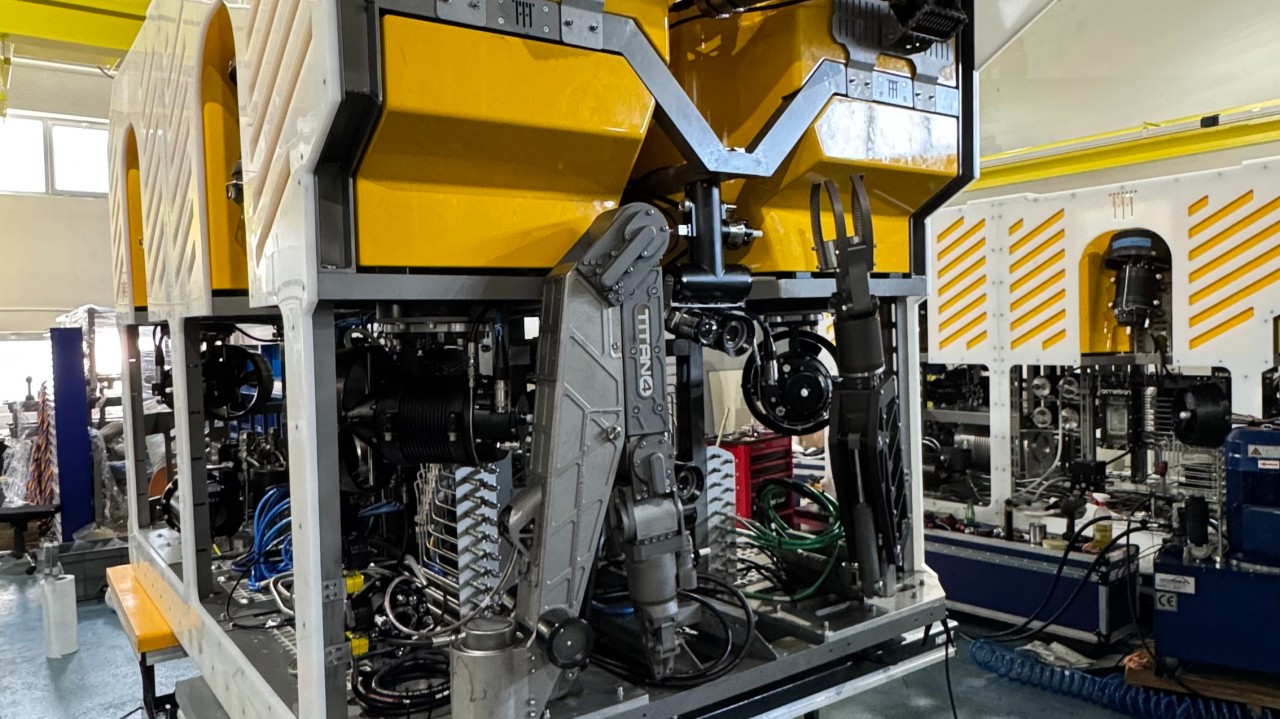
Hybrid ROVs split the difference intelligently. They pair reliable electric thrusters with hydraulic subsystems for tooling, capturing electric efficiency where it matters most while preserving proven maintainability. The architecture matters too: AC power delivered down the tether, stepped down via simple transformers, means minimal semiconductor complexity. Fewer chips mean fewer failure points, easier repairs, and technicians who can actually help you on-site.
Critically, maintenance windows compress dramatically. Hydraulic-only systems demand days of downtime; hybrid systems achieve most repairs in eight hours. When vessel mobilization and platform availability cost tens of thousands daily, those six extra days of downtime represent hundreds of thousands in lost revenue.
This isn't conservatism. It's risk management. In a capital-intensive industry, operational simplicity, global maintainability, and predictable downtime are competitive advantages. Hybrid ROVs deliver innovation without abandoning what works. That is not the flashy story, but it is the one that wins in the field.